
Table of Contents
Quick answer
Inspect outer transport packaging and the sterile barrier separately, document visible damage and identify affected lots. Visual inspection can flag concerns but cannot prove sterility or replace packaging validation. Hold questionable stock for review under the applicable product instructions and quality procedure.
A delivery arrives with one dented outer carton. The sealed unit packs inside appear unchanged. On another shipment, the transport carton looks normal but moisture is visible around one pouch. These observations should not be merged into a single “packaging damaged” note.
A useful receiving procedure identifies which layer is affected, which units may be involved and what evidence is needed for a disposition. It does not ask warehouse staff to prove sterility by looking at a package.
Which packaging layer are you inspecting?
Separate the transport carton, protective packaging and sterile barrier. Each may serve a different purpose, and the specific system must be confirmed from the manufacturer’s documentation.
ISO 11607-1 addresses packaging systems intended to maintain sterility for terminally sterilized medical devices. Its published scope also identifies limits concerning aseptically manufactured devices and combination products. Do not assume one packaging standard describes every aesthetic product simply because it arrives in a sealed pack.

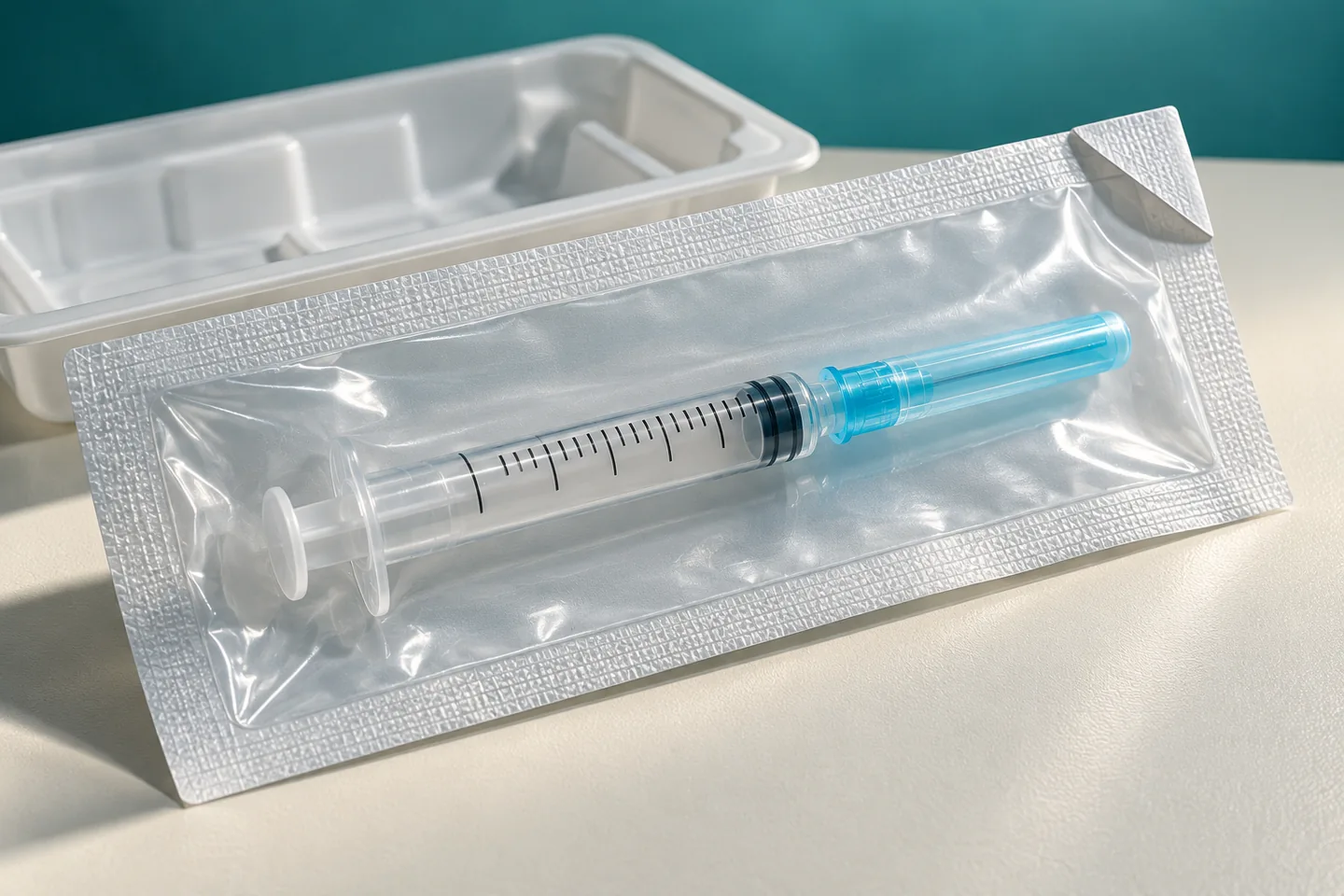
Ask the supplier to identify the sterile barrier in the supplied configuration. An outer printed carton may carry essential information without being the layer responsible for maintaining sterility. Conversely, an apparently minor defect at a pouch seal may matter more than a visible scuff on the transport box.
What should a sterile barrier packaging inspection record?
Use a short, reproducible checklist that describes what can actually be seen. “Looks poor” is difficult to investigate; a photograph of a specific seal corner with the unit reference is useful.
| Observation | Record at receipt | Next question |
|---|---|---|
| Carton compression | Location, extent and affected cartons | Did the load transfer to unit packs? |
| Puncture or tear | Packaging layer and unit identifiers | Is the sterile barrier affected? |
| Seal irregularity | Exact edge or corner and clear photographs | Does it meet the product-specific criteria? |
| Moisture or staining | Inside/outside location and timing | Is there evidence of exposure or leakage? |
| Loose or displaced contents | Number of units and pack configuration | Is protective packaging performing as intended? |
| Missing or unreadable label | Model, lot and date fields affected | Can identity be recovered without guessing? |
Record the arrival condition before repacking. Keep shipping labels and handling evidence where relevant. If the concern affects a group of units, identify the group rather than treating one photographed sample as the entire scope.
Can a clean-looking pouch demonstrate sterility?
No. Appearance is an observation, not a sterility determination. An intact-looking pack does not reveal the complete manufacturing, sealing, sterilization or storage history.
The FDA’s guidance on sterility information for devices labelled sterile illustrates the broader evidence expected in a defined regulatory submission context. Buyers should ask for packaging and process information relevant to the actual product, rather than interpreting a visual check as equivalent evidence.
The practical consequence is to define both the scope and the limits of receiving inspection. Staff can identify visible departures from accepted condition. Product release and any further investigation should follow the responsible quality function’s procedure.
How should suspected damage be handled?
Place affected stock in a controlled hold status, retain its lot identity and protect it from further damage. Communicate the observations to the supplier with photographs and shipment references. Do not cover a questionable seal with tape and treat the repaired appearance as restoration of the original system.
The disposition may depend on the location of damage, manufacturer criteria, additional evidence and applicable market requirements. Avoid setting a universal rule that every dented carton must be destroyed or that every undamaged-looking pouch may be released. Both shortcuts ignore the actual configuration.
For a repeat concern, compare the pattern across shipments: same carton position, seal edge, pack size or route. That record helps distinguish an isolated handling event from a recurring packaging issue without declaring a cause before the investigation.
Agree packaging acceptance before the next order
Add the approved pack configuration, transport protection, receiving criteria and contact for discrepancies to the purchasing file. For OEM projects, define how packaging changes are communicated and how revised evidence is reviewed before shipment.
The quality documentation page is a starting point for discussing available records; product-specific packaging evidence should be requested for the model being purchased. Freight arrangements belong in the shipping planning discussion, while the receiving record should remain focused on what arrived and how that stock was assessed.
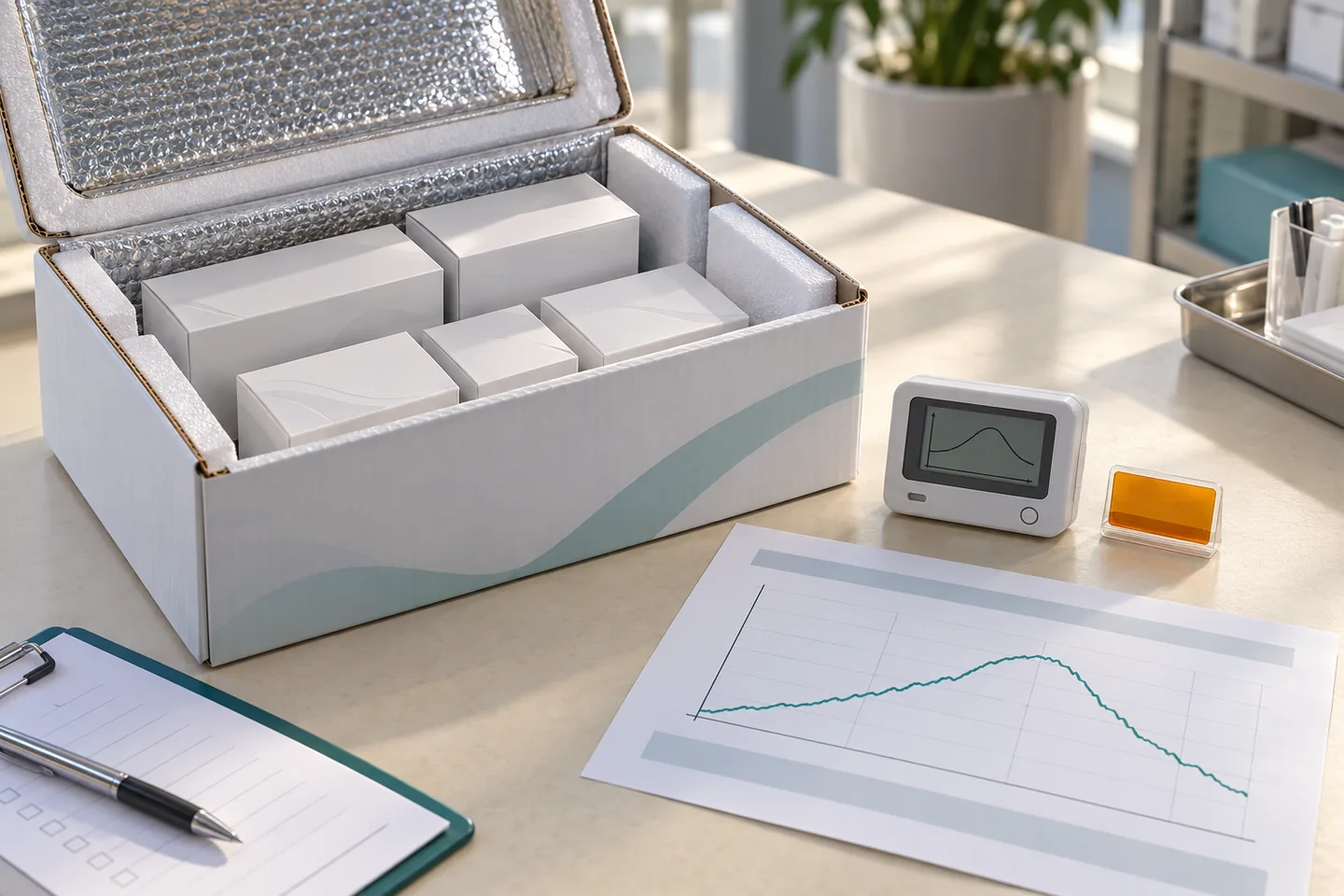
A packaging finding and a temperature alarm require different evidence. If a logger also shows an exception, retain a linked temperature excursion record for the same shipment.
Frequently Asked Questions
Should every received pouch be opened for inspection?
No. Opening the sterile barrier changes the condition of the unit. Follow the approved receiving and sampling procedure; any destructive evaluation must use designated samples and must not return opened units to saleable stock.
Can a photograph settle a seal-integrity question?
A photograph helps document location and appearance but does not establish integrity. The responsible quality function may need further inspection, manufacturer evidence or testing appropriate to the packaging system.