
Table of Contents
Quick answer
Approve private label artwork against a controlled product and market brief, then reconcile the unit label, carton and instructions. Separate fixed text from variable lot and expiry fields, assign review ownership, and record the approved revision before printing. Branding changes may have regulatory implications.
The expensive artwork error is often small: a changed pack count on the carton, an older storage statement on the leaflet, or a lot field placed across a fold. The design looks coherent, yet the information no longer describes one controlled product configuration.
For private label medical device labeling within an aesthetic branding project, the pre-print review should therefore test consistency as well as appearance. Its output is an identifiable approved revision, not a collection of email messages saying that the design looks good.
What should a private label medical device labeling brief contain?
Provide a controlled brief identifying the product, package configuration, destination market, required language versions and responsible parties. Mark which statements come from approved product documentation and which commercial wording still needs review.
Do not ask a designer to infer intended use from a competitor’s box or fill empty space with treatment claims. If a required statement is not available, leave the internal working file unresolved and obtain the approved content before printing. A placeholder is useful during design; it is not acceptable on released artwork.
The brief should also say whether a change affects only branding or changes the manufacturer identity, product presentation or information supplied with the device. That distinction belongs with the responsible regulatory and quality functions.
Which packaging components should be checked together?
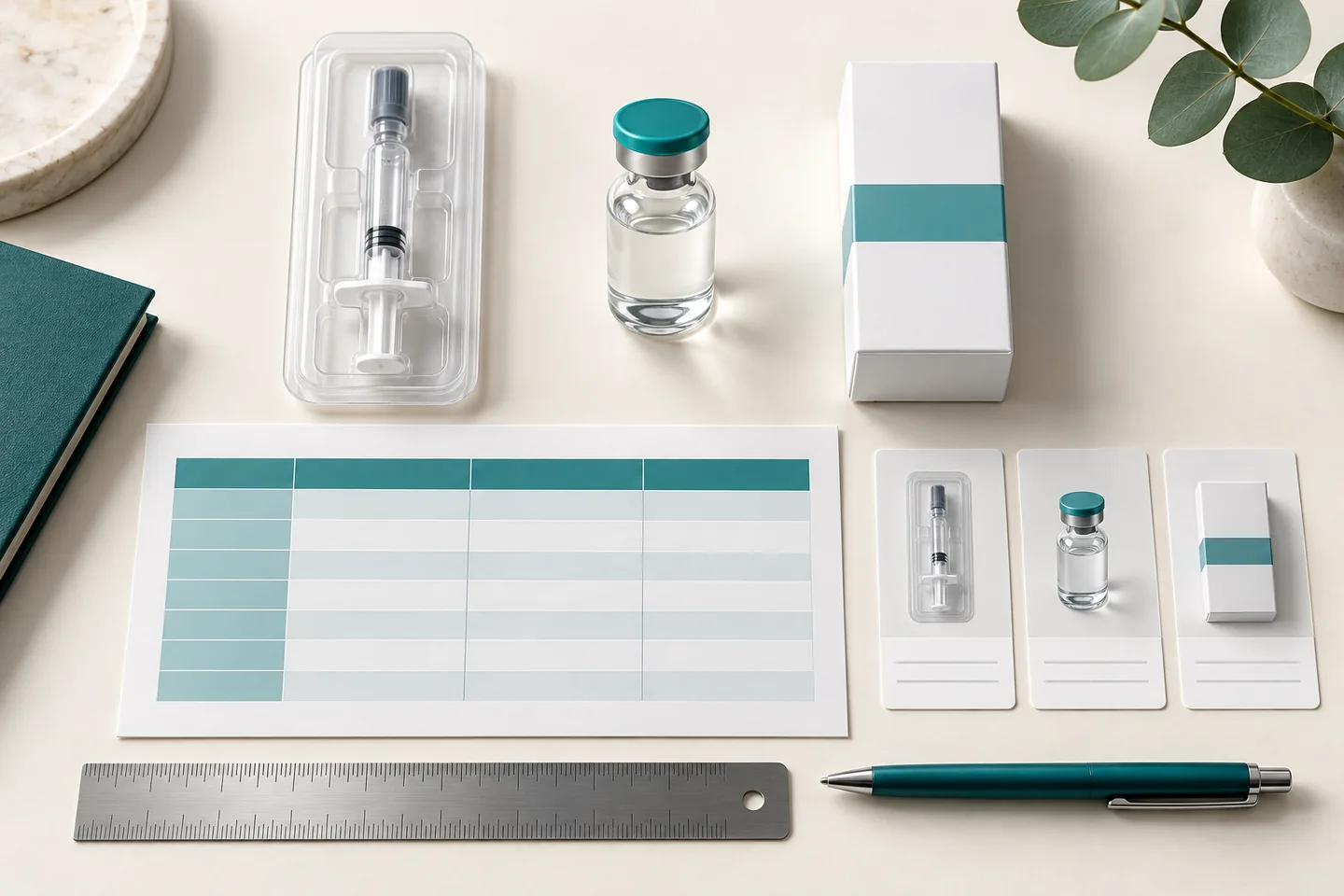
Review the unit label, carton and instructions for use as a linked set. A correct carton cannot repair an incorrect unit label, and an accurate leaflet can still be packed with the wrong variant.
| Review area | Compare across the pack | Record the evidence |
|---|---|---|
| Identity | Product reference, variant and pack count | Approved product brief |
| Responsible parties | Names, addresses and roles where applicable | Market-specific approved text |
| Product statements | Intended use, limitations and handling information | Controlled source documentation |
| Language | Meaning, units and consistency | Reviewed language version |
| Variable fields | Lot, dates and identifiers as applicable | Coding layout and verification plan |
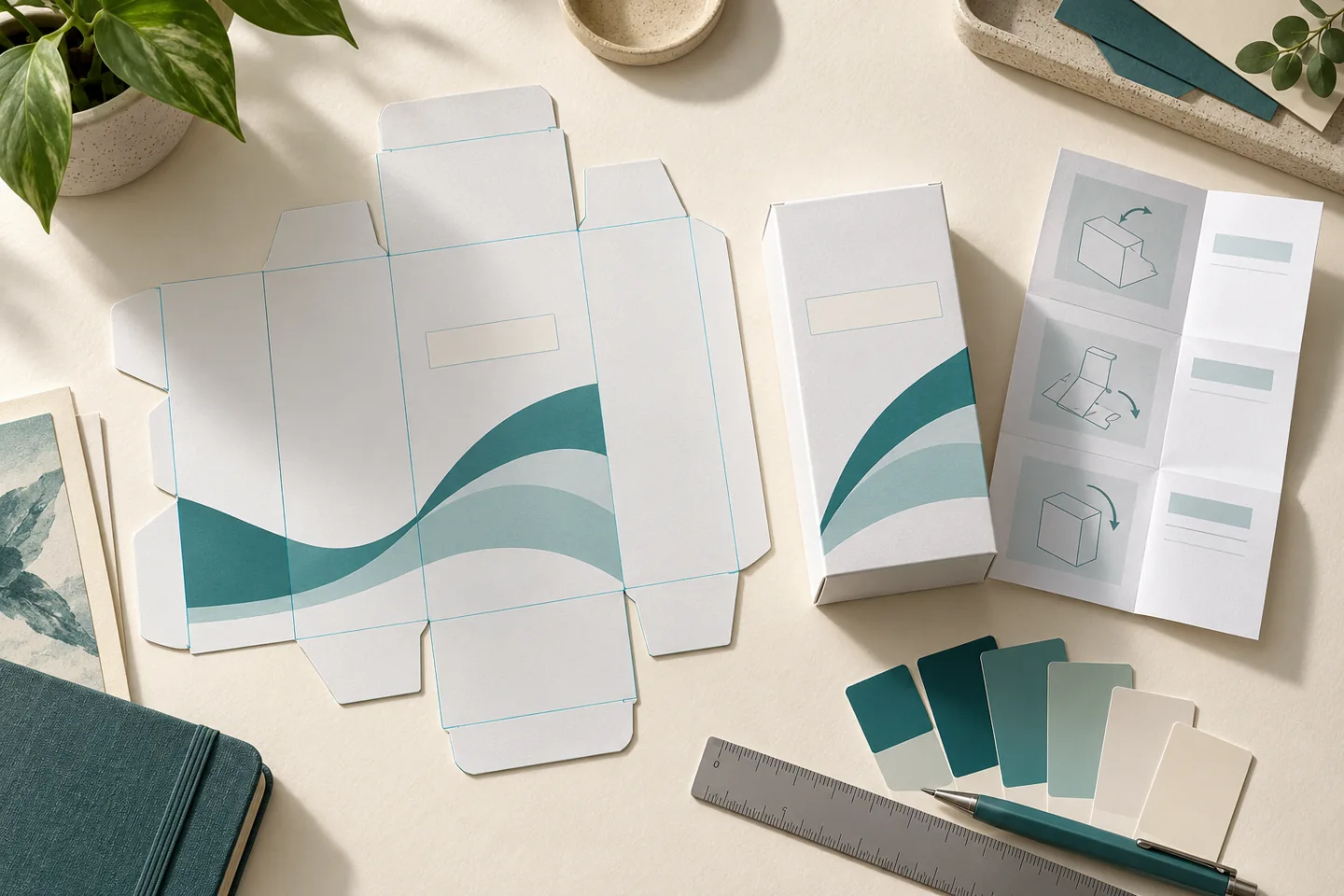
| Production layout | Fold, seal, label and code positions | Dieline and physical proof if needed |
This is an editorial review aid, not a universal legal labelling checklist. Required information depends on the product and market. Add applicable requirements to the brief rather than assuming a generic template covers them.
Why separate fixed artwork from variable data?
Fixed artwork is normally controlled by a design revision. Variable fields change with production, such as lot and date information. Review both systems, including the process that joins them on the finished pack.
A blank expiry field in a design file may be intentional if the date is printed later. The reviewer still needs to know where it will appear, whether it remains legible after folding and how the finished output will be verified. Conversely, a sample date must not become permanent text in the production artwork.
A practical handoff includes one annotated proof showing reserved coding areas and a separate example of completed variable fields marked as a proof. Keep example data out of the production master. Confirm which supplier function owns the coding setup and which function verifies the result.
When does a branding change require more than artwork review?
When it changes regulated information or the parties’ responsibilities, the regulatory assessment must come before print approval. In the EU, MDCG 2021-26 explains specific relabelling and repackaging activities under Article 16(2)–(4). It explicitly separates those questions from cases under Article 16(1) where manufacturer obligations can apply.
That guidance is not a general permission to place any brand on an existing product. Describe the proposed change precisely and establish the applicable route for the actual arrangement. Do not add a certification logo or market-access statement merely because another product in the supplier’s range carries it.
What should the final approval record contain?
Record the file name, revision, date, product configuration, language and named approvers for content and production readiness. Attach the approved proof and identify superseded files. The printer should receive one unambiguous production package.
For later changes, document the reason, affected components and whether existing stock is involved. A small text correction can still create mixed revisions in inventory if the transition is not planned. Agree how old materials are segregated and how the first output of the new revision is checked.
The OEM guide covers the broader project inputs. A disciplined artwork record makes one part of that project concrete: everyone can identify what was approved, for which product, and what the printer was instructed to produce.
Assign responsibility for approving and changing those files in the OEM quality agreement; the artwork proof should identify the approved content, while the agreement identifies who controls it.
Frequently Asked Questions
Is a screen proof enough for final packaging approval?
It can verify content and layout, but physical checks may still be needed for print legibility, folds, label placement and scanning. Agree which checks require a production-representative sample before authorizing the run.
Can an importer add a translated label without further review?
Do not assume translation is only a graphic-design task. Assess the applicable market rules, economic-operator role and the effect on the original information. The EU Article 16 guidance addresses specific relabelling and repackaging situations, not a blanket permission.
Sources
- MDCG 2021-26: Questions and Answers on repackaging and relabelling under Article 16 — Medical Device Coordination Group (2021-10)